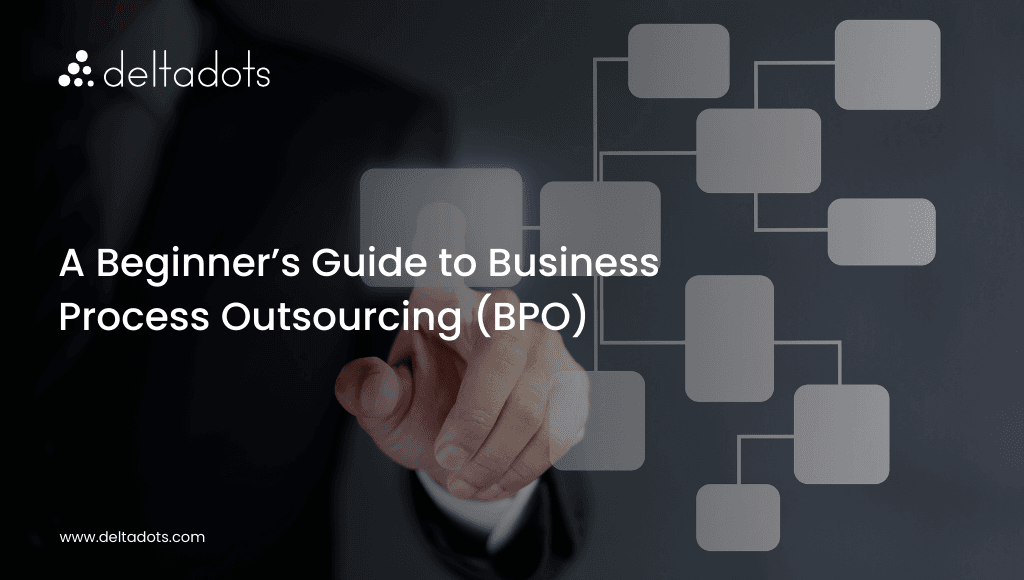
BPO is a method of subcontracting various business-related operations, especially non-core ones, to a third-party vendor. It represents outsourcing for complete business processes like payroll, IT, and customer service. There is a difference between traditional outsourcing and BPO. Traditional outsourcing means a company hires a vendor to do a specific task, such as IT services, while BPO manages the entire process. The two types of BPOs are Back-Office and Front-Office. Back-Office BPO handles internal functions such as payroll, accounting, HR, data entry, and IT support. These functions reduce errors, guarantee compliance, and allow staff to concentrate on more important tasks during busy periods. Front-Office BPO handles customer services that involve support, helpdesks, telemarketing, and sales. Outsourcing these operations lowers the cost, yields faster and continuous service, and provides access to skilled personnel. Small and large businesses use BPO as small businesses gain expertise and flexibility without high overhead, while large businesses optimize global operations and concentrate on key activities. BPO enhances productivity, increases scalability, and improves service quality across all company sizes.
What Are the Most Common Processes Outsourced in BPO?
The following are the most common processes outsourced in BPO;
- Customer service: Businesses outsource customer services like email assistance, online chat, and call center to get quick and reliable service.
- Human Resource Services: Outsourced process includes hiring and managing employees and processing payroll. The companies outsource HR to save time, reduce costs, and access skilled professionals.
- Finance & accounting: Billing, invoicing, and bookkeeping are outsourced by businesses to save costs while maintaining the accuracy of financial management.
- Data entry and document processing: Entering, updating, and maintaining business information are outsourced to maintain accuracy and save time.
- IT services: Businesses outsource helpdesk support and infrastructure management to gain hands-on experience and to function smoothly.
- Sales and lead generation: Processes such as prospect identification, calling, and meeting setup are outsourced to increase revenue by reaching more customers.
- Digital marketing tasks: Social media management, search engine optimization, and online advertising services are outsourced by companies to reach more customers and improve market results.
What Are the Main Types of BPO Models?
The main types of BPO models are;
- Onshore BPO: Delegating tasks to a company within the same country is called onshore outsourcing. It works well for tasks needing face-to-face interaction and easy communication. Keeping operations domestic gives better control and matches the company’s culture.
- Nearshore BPO: Partnering with a company in a neighboring country is known as nearshore outsourcing. This model saves cost and increases communication. For instance, a U.S. company outsources tasks economically to a provider in Mexico or Canada to benefit from similar time zones and cultural similarities.
- Offshore BPO: Partnering with a company in another country to reduce costs and access skilled workers. For instance, a U.S. company hires a customer support company in the Philippines to manage its customer service operations.
- Knowledge Process Outsourcing (KPO) vs Business Process Outsourcing: Business Process Outsourcing deals with regular activities such as customer care, payroll, and data entry. Knowledge Process Outsourcing requires specialized knowledge for carrying out research and analytics or other work involving expertise in the fields of law and finance. BPO saves time and reduces the cost of regular activities. KPO brings strategic value through knowledge and insight.
- ITES BPO: Information Technology Enabled Services (ITES) BPO provides services related to technology, such as IT support, software development, and help desk services. Organizations avail ITES BPO to enhance efficiency and gain technical expertise.
What Are the Benefits of BPO for Beginners?
BPO helps beginners reduce costs through labor savings and efficient processes. It gives businesses the ability to scale up or down during growth or seasonal demand. Companies get access to expert talent without hiring full-time staff. Tasks are completed faster with optimized workflows. BPO lets businesses focus on their core functions. It grants access to advanced technology without any additional investment. Processes run smoothly, and errors are reduced. BPO develops growth and efficiency for new businesses.
How to Choose the Right BPO Provider as a Beginner?
The following are the steps to choose the right BPO provider. Identify the process needs by clearly defining the scope of work. Evaluate vendor’s past experience and industry expertise. Assess vendor technical capabilities and tools for the outsourced business process. Understand the pricing model of vendors and evaluate their communication procedures. Check vendor certifications, such as their compliance with ISO and GDPR. Request a pilot project or trial before making a long-term commitment.
What Pricing Models Are Common in BPO Services?
The following are the common pricing models for BPO services;
- Fixed-price model: A fixed-price BPO model charges a fixed price for a well-defined scope of work. It offers predictable costs for tasks like data entry or general support. Changes in requirements reduce flexibility but ensure financial certainty for the client.
- Time-based or per-hour pricing: It charges a fixed hourly rate for an agent’s work, regardless of the number of calls or tickets received. This offers predictable billing, and resources are scaled easily. It becomes costlier during periods when agents are idle and not fully utilized.
- Per-seat or per-agent pricing: In per-agent pricing, a flat monthly fee is charged by an outsourced agent. It ensures predictable costs and frees agents to deliver consistent high-quality service. The costs remain the same when the periods are slow, irrespective of the call or ticket volume. It is best for call centers.
- Per-transaction or per-task billing: A company pays only when a task is completed. Each call, message, or transfer has a fixed price. Costs go up when work increases and stay low when work is less. This model is simple, easy to track, and commonly used for data entry tasks or claims processing.
- Outcome-based pricing: The BPO provider is paid based on results, such as customer satisfaction or first-call resolution. It motivates high performance and aligns vendor incentives with business goals. Requires clear metrics, but potentially complex costs and contracts.
How to Successfully Onboard a BPO Vendor
Successfully onboarded a BPO vendor by defining the tasks, KPIs, and SLAs. Share documents and training required for the process. Provide access to different tools and communication channels. Set up reporting dashboards and frequency of weekly/monthly check-ins. A pilot phase is necessary to test processes and workflows. The quality of work in this phase is closely monitored. Early feedback is necessary to correct issues quickly. Make the vendor understand what keeps the operations going smoothly.
What KPIs Should Beginners Track for BPO Performance?
Begin tracking the key KPIs that measure BPO performance. Process accuracy rate ensures that all tasks are completed correctly. Turnaround time defines how quickly work gets completed. The cost reduction achieved explains the efficiency. CSAT, or customer satisfaction score, determines service quality. Service Level Agreement compliance ensures commitments are met. First-contact resolution in customer service BPO measures the effectiveness. Regularly reviewing such KPIs helps improve performance and attain business goals.
What Does the Future of BPO Look Like for New Businesses?
Technology and flexibility are the characteristics that shape the future of BPO for new businesses. AI automation and chatbots handle routine customer interaction with efficiency. Robotic process automation (RPA) streamlines repetitive tasks, reduces errors, and increases speed. Cloud-based workflows support smooth remote collaboration and scalability. Data-driven outsourcing uses analytics to improve performance and decision-making. Micro-outsourcing and gig-based BPO capabilities provide flexible and cost-effective support to meet specific business needs.