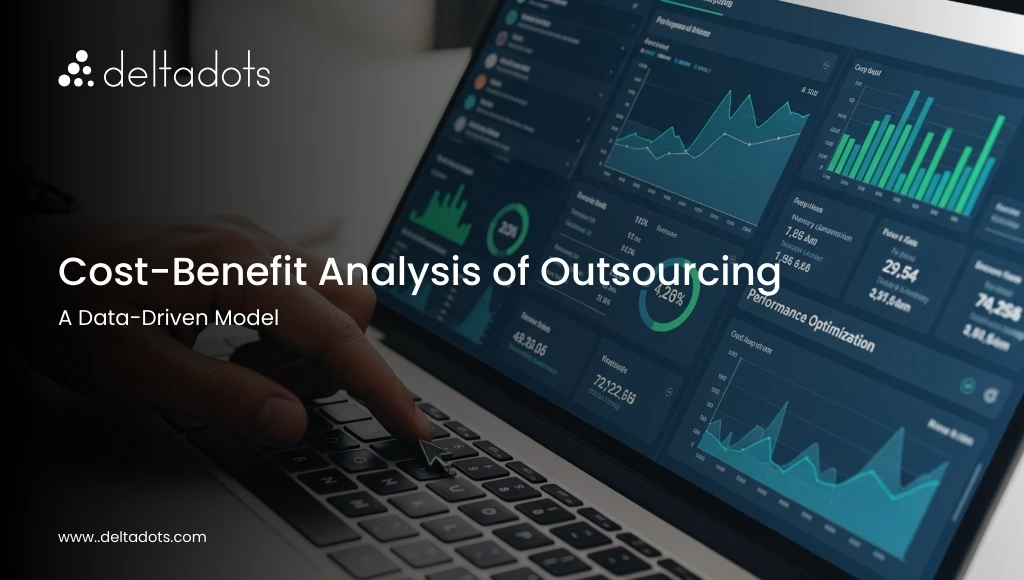
A cost-benefit analysis of outsourcing enables a business to compare the positive and negative sides of outsourcing to an external vendor. This process allows companies to check all the costs, benefits, and possible problems before taking any action. It guides small, medium-sized, and large companies to use their resources wisely. It helps them know if outsourcing really helps their goals and ensures that real value is achieved. In the data-driven model, the company derives its outsourcing decisions based on facts instead of guesses. It gives clear numbers for ROI, efficiency, and cost savings. It also helps the companies to determine the tasks that provide the most value to the organization. Vendor performance becomes measurable with ongoing tracking and enables timely improvements. This guide enables a business to evaluate the costs, benefits, risks, and ROI when working with external vendors.
What are the Key Costs and Benefits to Consider in Outsourcing
The key costs and benefits to consider in outsourcing are;
- Direct Costs: Look at direct costs like vendor fees, setup costs, and salaries. Direct costs make it easy to compare prices, plan budgets, and choose the most cost-effective vendor.
- Indirect Costs: Management overhead, time of onboarding, and communication tools come under indirect costs. These are extra tasks and resources needed to handle the vendor. Business compares these costs with the benefits to determine whether outsourcing is beneficial.
- Hidden Costs: It covers platform charges, training, contract changes, and currency fluctuations. Companies consider them before opting for outsourcing.
- Opportunity Costs: Opportunity costs in outsourcing show what a company misses out on by choosing one option over another. It helps decide if outsourcing brings more benefits than keeping the work in-house.
- Operational Efficiency Gains: Outsourcing streamlines the working processes. It provides skilled expertise and advanced technology. Outsourced teams work on business core matters and enhance productivity.
- Cost Savings: Outsourcing saves money on salary, infrastructure, and operational costs. It saves labor, space, and training. Businesses invest these savings to focus on development.
- Access to Expertise & Innovation: External experts provide advanced skills and tools. It accelerates innovation and guarantees the quality of the services.
- Scalability & Flexibility: Outsourcing provides an opportunity for companies to scale up and down operations with minimal investment. It provides access to specialized capabilities and minimizes fixed spending over time.
- Risk Mitigation: Experts in compliance, security, and operations make outsourcing a way to mitigate risks. It assists in securing confidential information and guarantees quality.
What is the Step-by-Step Data-Driven Outsourcing Analysis Model
The stepwise outsourcing analysis model is;
- Define Scope & Objectives: Identify tasks or projects to be outsourced with clear goals and defined KPIs that keep the process measurable and focused.
- Gather Cost Data: Gather data regarding direct, indirect, hidden, and opportunity costs. The complete financial view includes in-house expenses and the cost of outsourcing. It enables a clear, data-driven decision.
- Estimate Expected Benefits: Determine expected benefits through measuring operational gains, efficiency, and risk mitigation. Measure possible cost savings and better compliance.
- Calculate ROI & Payback Period: The formula for calculating ROI is subtracting total costs from total benefits, dividing by total costs, and multiplying by 100. The payback period is obtained by dividing the outsourcing investment by the average annual cash flow. These metrics indicate financial value and recovery time.
- Perform Sensitivity Analysis: Check how changing costs or benefits affects results. Test one factor at a time. Use the results to spot risks and guide decisions.
- Visualize & Report Findings: The analysis results are represented on charts, tables, and dashboards. Highlight key metrics and trends that drive decisions. Customize visuals to the audience, and place insights in context.
What are the Tools & Techniques for Cost-Benefit Analysis
Cost-benefit analysis is done using the following tools and techniques;
- Spreadsheets & Models: Excel and Google Sheets support scenario modeling, sensitivity analysis, and clear visual reporting. Goal Seek and Data Tables are advanced tools and allow a more in-depth insight into the data and automation.
- Project Management & Time Tracking Tools: Asana, Trello, and Jira are time tracking and project management tools. Their data describes the prices of labor, cost efficiency, and project schedules.
- Financial Analytics Software: QuickBooks, Zoho Books, and Tableau track, organize, and represent financial data to perform cost-benefit analysis. They deliver real-time tracking of costs, dashboards, and reports to measure the profitability of projects and aid in making data-driven decisions.
- Dashboards & KPI Tracking: Use tools like Tableau, Power BI, and Databox to track savings, performance, and efficiency of vendors. The metrics include ROI, reduction in costs, cycle time, and compliance, which are viewed in real-time to make informed decisions.
How to Optimize Outsourcing Decisions Using the Model
Share updated data on internal costs, vendor performance, and the market rates to make correct outsourcing decisions. Compare the options of various outsourcing alternatives to compare the value, risk, and strategic alignment. Use predictive analytics to predict long-term cost-benefit trends and possible risks. Add feedback loops by seeking feedback from stakeholders, internal teams, and even vendors to constantly improve the strategy. Performance results are checked regularly, and the strategy is changed when needed. This keeps the outsourcing process efficient and helps meet the business goals. It is a data-based process to make sure everything stays on track.
What are the Common Mistakes in Cost-Benefit Analysis of Outsourcing
The following are the common mistakes in the cost-benefit analysis of outsourcing.
- Overestimating benefits without historical data: The common mistakes include overestimating benefits, neglecting hidden costs, and concentrating on price. Failure to set specific objectives, conduct proper vetting of vendors leads to poor outcomes.
- Ignoring indirect or hidden costs: These include transition costs, vendor costs, quality concerns, legal costs, and opportunity costs. These all influence the actual financial performance.
- Failing to account: The lack of accountability for operational risks and variability in the performance of the vendor causes project delays.
- Decisions based on the lowest cost: The focus on the lowest cost rather than skill or ROI results in low quality of services, rework, and long-term losses. Assessment of vendor experience makes the outsourcing decisions more effective and sustainable.