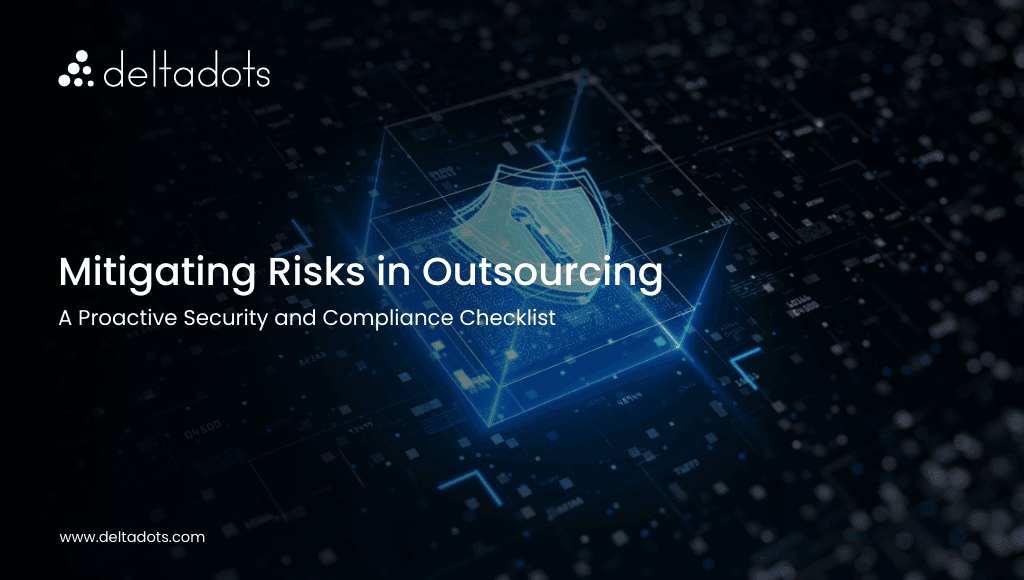
Risk mitigation means taking actions to reduce the chances of problems or losses in a business and to make the business safer and more stable. In outsourcing, risk mitigation means protecting important information and business work when working with outside vendors. Poor risk management leads to data breaches, financial loss, or damage to the company’s reputation. Companies mitigate these risks by carefully checking vendors’ security measures and privacy policies before signing contracts. They also ensure that security rules, audits, and data ownership are clearly stated in contracts. Regular reviewing and monitoring of vendors helps protect the business and maintain long-term operational security. This guide helps organizations identify and mitigate the risks involved in outsourcing. It provides a clear checklist of security, compliance, and operations. It helps companies collaborate with vendors while keeping information and operations safe.
What are the Key Types of Risks in Outsourcing
The key types of risks in outsourcing include;
- Data Security Risks: Outsourcing is associated with risks such as data breach, low quality, hidden costs, and loss of control. Data security risks in outsourcing happen when vendors handling business data fail to protect it, which leads to leaks, unauthorized access, or loss of important information.
- Compliance & Regulatory Risks: These are risks that a company faces when breaking laws, rules, or industry standards when working with vendors. Compliance & regulatory risks happen when companies or their vendors don’t follow the rules, laws, or industry standards, which causes fines or other problems.
- Operational Risks: Operational risks include mistakes, system failures, vendor issues, and fraud. They occur when system problems or process failures cause the business to lose time, money, or efficiency.
- Financial Risks: Credit risk occurs if customers don’t pay, market risk happens when prices or exchange rates change, and liquidity risk arises when the business doesn’t have enough cash to pay bills. These risks happen because of late payments, economic changes, or money being tied up.
- Reputational Risks: Reputational risks in outsourcing occur when a vendor has poor performance or misconduct, which damages the brand. It also involves the service failure, the breach of law, or the inappropriate actions of employees.
What Should Be Included in a Pre-Outsourcing Risk Assessment Checklist?
The following is the checklist involved in a pre-outsourcing risk assessment;
- Define Scope & Sensitivity of Data: A pre-outsourcing risk checklist defines the scope of the project and identifies the sensitive data. It verifies the contracts, compliance, and vendor’s security. It also addresses disaster recovery, business continuity, and continuous monitoring.
- Evaluate Vendor Reputation: Evaluating a vendor provides the company with information about the vendor’s reputation, past performance, and certifications. It checks on security, compliance, and financial stability.
- Assess Legal & Regulatory Requirements: Make sure that the vendor is performing in accordance with all the laws and regulations. Assessing legal & regulatory requirements verifies the data privacy, intellectual property, and regulatory standards. It also incorporates the contract safeguarding and audit rights.
- Examine Security Protocols: Check the vendor’s security rules and measures, including encryption, access control, and firewalls. Make sure they protect sensitive information and prevent data breaches.
- Review Business Continuity & Disaster Recovery Plans: A pre-outsourcing checklist verifies the business continuity and disaster recovery plans of the vendor. It examines backups, the recovery process, and testing. This also makes the vendor capable of managing unavailability and disruption.
What Contractual and Legal Safeguards Are Essential in Outsourcing?
Essential contractual and legal provisions in outsourcing are used to protect a business. NDA prevents the service provider from disclosing or misusing valuable information. A Service Level Agreement (SLA) sets the standards for how the provider performs. The contract also states who owns the intellectual property (IP) and how the provider uses any data. It also explains who is accountable in case something goes wrong. The termination clauses safeguard the business and allow the business to continue smoothly in case the contract is terminated.
What are the Security Measures to Implement
The following are the security measures to implement
- Data Encryption: Strong data encryption protects information when it is sent and stored. Secure protocols and good algorithms keep data safe. Firewalls, VPNs, and regular checks make sure the data is not harmed or stolen.
- Access Control: Vendors and employees get access only to the information and systems needed for their outsourced tasks. Multi-factor authentication adds extra safety by using more than one way to confirm identity. Regular audits keep access safe and updated.
- Regular Audits & Monitoring: Frequent audits and monitoring helped to ensure the vendor abides by all security rules. Companies use planned checks and automatic tools to watch for possible risks. This kept security high and ensured continuous protection.
- Incident Response Plan: An incident response plan sets out how to quickly report and handle a security problem. It helps teams find out where the issue lies, stop it, fix what caused it, and get systems back up and running.
What are the Compliance Measures to Follow
Compliance measures are used to ensure that a company complies with all laws and industry regulations, such as GDPR, HIPAA, ISO, and SOC 2. Organizations need to do regular audits, maintain comprehensive records, and regularly update policies as regulations change. Employee training and vendor monitoring also assist in retaining good compliance.
What are the Ongoing Risk Mitigation Practices
Ongoing risk mitigation practices keep vendor relationships and data secure. This includes continuous monitoring of vendor performance and their security measures to identify potential issues early. Provide regular training to internal staff and vendor teams to keep them updated on policies and threats. Establish clear communication protocols so teams are able to report risks or problems quickly. Use metrics and KPIs to monitor the effectiveness of risk management. Ongoing risk mitigation practices reduce risks and maintain strong security.
What are the Common Outsourcing Risk Mistakes to Avoid
The most common outsourcing risk mistakes to avoid include:
- Ignoring the vendor: Not properly checking the vendor is the most common mistake in outsourcing. It is the cause of poor quality, security issues, and financial risks. It is always important to evaluate the skills of a vendor, track record, security, and cultural compatibility before outsourcing.
- Overlooking regulatory compliance requirements: Legal and data risk is an outcome of the absence of regulatory compliance in outsourcing. Check for the certifications, legal status, and compliance adherence of the vendor. Make all compliance obligations part of the contract and monitor regularly.
- Neglecting proper documentation: Failure to observe contracts and documents brings about confusion and legal problems. Specify the scope, deliverables, and IP rights in a contract. Use SLAs and a change management process to be accountable.
- Security and risk management: It is a major mistake to think that the vendor handles all the security tasks. The hiring company is still responsible for protecting the data and ensuring compliance. Conduct due diligence, restrict access, and always monitor security.
- Failing to monitor: If vendors’ performance is not monitored, work quality drops, and control is lost. Establish specific KPIs, conduct regular check-ins, and quarterly reviews to keep the services in line with the needs of the business.