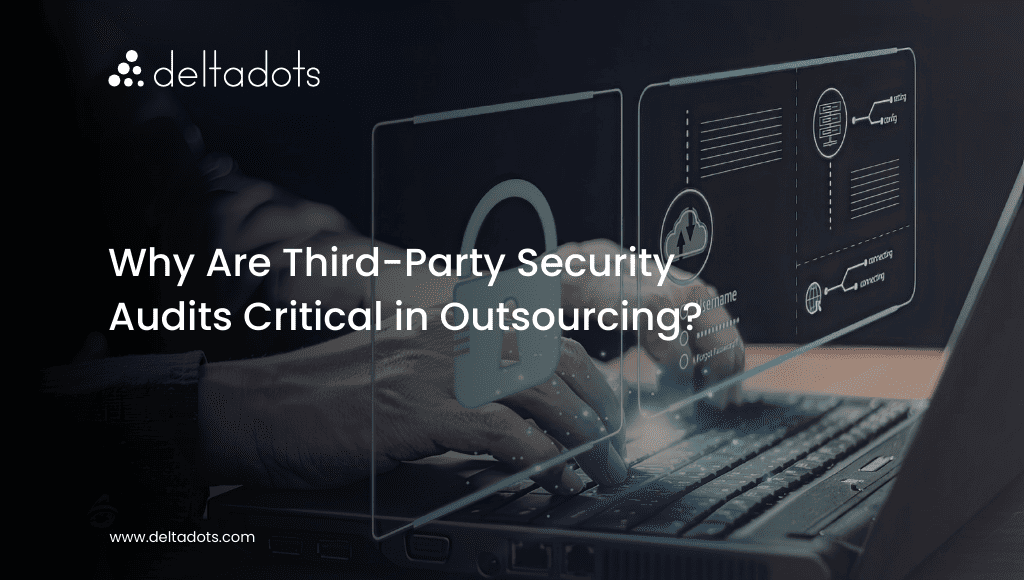
The outsourcing of IT, BPO, cloud and managed services continues to expand. Nevertheless, it increases the attack area. Vendors gain access to systems, data and internal tools. Each connection adds risk. This exposure is minimized by a third-party security audit. It is a standalone examination of a vendor’s controls, policies and systems of security. Outside specialists evaluate technical, operational and administrative controls without prejudice.
Outsourcing enhances security lapses. Vendors deal with sensitive financial and customer information. Organizations do not get visibility of daily practices. Multi-vendor environments involve the transfer of data among multiple parties. A single chain is broken.
What is the Importance of Third-Party Security Audits in Outsourcing?
Here are the four most important reasons why they are significant to organizations.
- External Risk Evaluation: Vendor security structures, access controls and incident response procedures are reviewed by external auditors. They identify the latent vulnerabilities, misconfigurations, and control loopholes that internal teams fail to identify in regular audits.
- Regulatory and compliance assurance: Audits ensure compliance with GDPR, HIPAA, and ISO 27001, among others. Obvious documentation and evidence limit exposure to fines, breach of agreements, and regulatory measures of the contract.
- Data Breaches Prevention: Networks, applications and user privileges are tested by security professionals based on systematic evaluations. The rapid identification of vulnerabilities enhances security and ensures that encryption, monitoring, and access controls are working correctly.
- Insurance of Brand Reputation: Frequent audits represent accountability and high governance behaviors. Public security checks are reassuring to customers, investors, and partners, and minimize reputational losses associated with security breaches by vendors.
Which Key Areas are Covered in Third-Party Security Audits?
Here are the six key areas that are reviewed in a third-party security audit.
- Governance/Security Policies: Auditors examine the documented security policies, the enforcement processes and accountability setups. They evaluate vendor risk management systems to ensure continuity in security governance, well-defined roles, and the monitoring of compliance with policies.
- Access Control and Identity Management: The audits are done on role-based access control, user provisioning processes, and management of privileges. Assessments are aimed at authentication procedures, rules of authorization, and unauthorized access prevention within systems and sensitive resources.
- Data Protection Measures: Security Reviews: Evaluate data at rest encryption as well as data in transit. Auditors review storage security, backup, retention controls as well as safeguards that prevent loss or exposure of sensitive information.
- Infrastructure & Network Security: Auditors review firewall policies, network segmentation policies and system hardening policies. Intrusion detection and prevention systems are also evaluated to ensure that they monitor activities in the network and identify them promptly.
- Incident Response & Recovery: Audits examine breach detection, escalation, and incident response plans. Reviewers evaluate disaster recovery preparedness, backup restoration test, and organization’s capability to continue its functioning following security incidents.
What are the Types of Third-Party Security Audits Used in Outsourcing
Here are the four key forms of organization access to assess vendor security:
- Compliance Audits: Compliance audits look at compliance with regulatory requirements, the contractual terms. Industry standards, like the ISO 27001 or GDPR. Auditors confirm documentation, conduct implementation of controls and signs of continued compliance practice.
- Technical Security Audits: Technical audits are vulnerability testing and penetration testing. Hacking experts test systems and find vulnerabilities that can be exploited and recreate conditions of a real-life attack to test defensive capability and the efficacy of remedies.
- Operational Security Audits: Operational audit checks on the daily security processes, activities, change management controls and employee awareness practices. They evaluate the efficacy of teams in enforcing policies in normal working conditions.
- Continuous Monitoring Assessments: Continuous monitoring assessment offers continuous security assessment by using automated tools, real-time alerts, and periodic reviews. This method goes after changing risks rather than a one-time audit cycle.
When Should Organizations Conduct Third-Party Security Audits?
Companies undertake third-party security audits in areas of high risk. They evaluate the vendors before entry to ensure security preparedness and avoid unsafe access. Audits during the renewal of contracts verify changes in controls and correspondence with compliance. Since the entire system is changed or the data is expanded, the reviews confirm new settings and access controls. After a security incident or a near miss, audits determine underlying causes, assess mitigation measures and ensure that the enhanced controls are working to minimize future security threats.
How Third-Party Security Audits Strengthen Vendor Accountability?
Third-party security audits establish explicit security expectations and quantifiable control criteria. The application of security clauses in contracts and corrective measures is enforced by documented findings. Periodic reviews encourage uniform security practices within vendor practices. Such systematic decision-making raises the level of transparency, accountability, and shared responsibility for the security of confidential data and systems.
What are the Common Challenges in Third-Party Security Auditing?
Here are the three primary pitfalls that organizations encounter when conducting third-party security audits:
- Vendor Resistance: There are those vendors who are opposed to audits because of the cost or disruption of operations, or proprietary processes being exposed. Inadequate transparency generates delays in accessing essential security records and systems.
- Cost limits: Oversight audits demand proficient staff, technology and time. Small or medium-sized vendors are usually strained financially and this limits the level of audit, frequency, and corrective measures undertaken.
- Scope Limitations: Some audits are only applied to main vendors without subcontractors or far-reaching chains. Such a limited coverage obscures unnoticed threats and undermines the greater transparency of third-party security risk exposure.
What is the Future of Third-Party Security Audits in Outsourcing?
The future of third-party security audits lies in greater focus on continuous and automated audits of vendor systems running in real time. Security in the supply chain is given more priority where all subcontractors are up to standard. Artificial intelligence tools are more efficient in identifying vulnerabilities and anticipating future risks. The regulatory bodies have a greater level of control and demand extensive records and demonstrations of compliance. Collectively, the trends enhance the proactive nature of risk management, enhance the visibility of vendor networks, and enable organizations to have robust security positioning in the multifaceted outsourcing space.