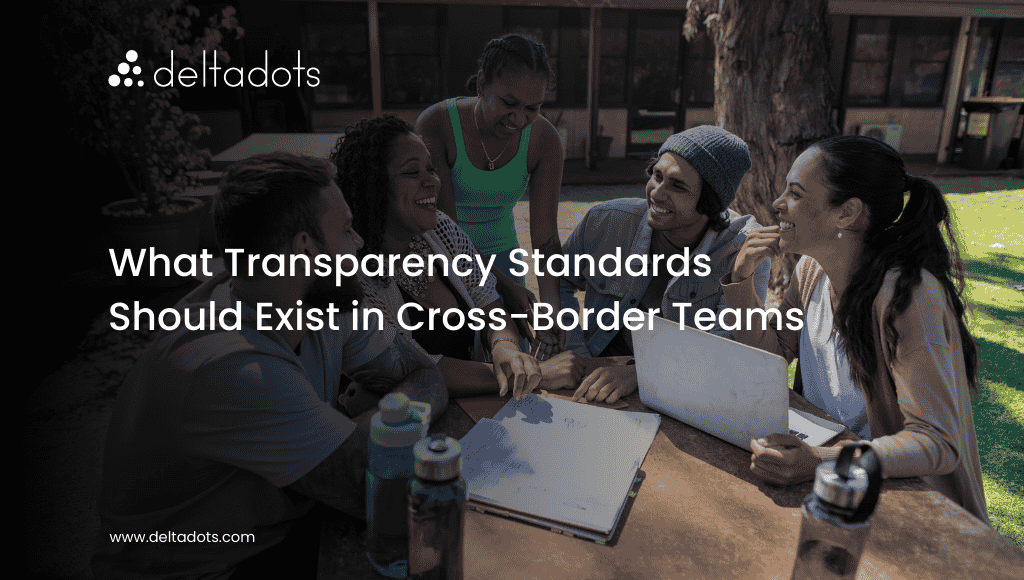
Cross-border team transparency implies that all individuals have access to the same essential information. All the team members receive equal access to the relevant data, are aware of the flow of work between the places, and have clear goals and roles. Transparent communication can increase performance by 25%. Geographic distance adds assumptions and incompatibility. The cultural differences influence the way individuals receive and communicate information. The legal and compliance rules are also different in various counties and therefore, clarity would avoid confusion and mistakes across borders.
Which Areas Require Mandatory Transparency Across Borders?
Here are the four most important areas that should be visible to hold cross-border teams in check and working:
- Roles and Responsibilities: Every team member is aware of their tasks and responsibility and even ownership of tasks in different locations. Role definition eliminates overlaps, confusion, and delays in cross-country projects.
- Decision Pathways: Teams monitor the making and escalation of decisions. Open channels mean approvals are quicker, there are fewer bottlenecks and everyone knows who to report to at any given point.
- Work Priorities: Teams visualize goals, deadlines and task dependencies. Priorities organize work between time zones and prevent conflicting schedules and keep projects on track anywhere in the world.
- Risk/Compliance restrictions: Each country has specific legal, regulatory, and operational boundaries. Transparency helps teams to honor local regulations, evade fines, and mitigate risk cross-border.
How Transparent Should Decision-Making Be in Cross-Border Teams?
Cross-border teams need to be clear in terms of ownership, logic, and communication in decision-making. Teams determine decision-makers, reasons behind decisions, and provide information to all regions promptly, which minimizes confusion, harmonizes efforts, and makes everyone aware of the process and its effects on the work process.
What Transparency Standards Should Exist for Performance and Outcomes?
Cross-border teams monitor common KPIs, such that in each location, metrics are similar. The status report and milestones are visible. Outcome reporting is a way to communicate results in a clear manner that is not region-based and makes sure that each team knows what they accomplished and what they need to focus on.
How Can Communication Transparency Be Standardized Across Regions?
The teams have regular communication patterns, ensuring consistency of updates across time zones. Distinct avenues divide formal and informal conversations. Documentation norms are used to make sure that vital decisions and actions are written down, making it less dependent on verbal communication and allowing all regions to obtain the same information with ease.
How Should Transparency Be Handled Across Time Zones?
Asynchronous updates are used by teams, where they share written summaries to minimize real-time dependency. Window overlaps offer dedicated time to the necessary discussions. Communication SLAs have clear expectations of response time which provides timely answers and consistency in information flow across all regions, keeping teams on track despite time changes.
What Financial Transparency Is Required in Cross-Border Teams?
Budgets are kept transparent in teams, and all people are aware of cost ownership and constraints. Spend tracking provides insight into the distribution of funds by region. Payments are just and stable and confidential personal information is safeguarded without risking trust and understanding.
How Can Transparency Standards Respect Cultural and Legal Boundaries?
The teams adhere to the data privacy regulations, retaining transparency within the local legal framework. Cultural sensitivity does not impose openness where there are dissimilarities in norms. Local disclosure regulations change transparency practices depending on the jurisdiction and the balance between clarity and regard for local regulation and social expectations.
How Can Technology Enable Transparency Without Overload?
Centralized systems offer a single source of truth to all groups. Access governance helps to get the right information to the right people. Automated reporting provides updates and visibility of progress without extra manual work and is efficient and manageable in terms of transparency across regions.
What Are Common Transparency Gaps in Cross-Border Teams?
Here are three common areas of non-alignment and inefficiency in cross-country teams:
- Information Silos: Teams or areas keep knowledge confidential, not allowing other team members access to vital information. This restricts cooperation, slows down the resolution of problems, and decreases organizational agility.
- Unequal Access: Headquarters receive updates first and the remote teams obtain only part of it. This brings discord, slows decision-making and reduces interconnectivity at different sites.
- Lack of Escalation Paths: Teams become confused when they need escalation routes but these paths are not clearly defined. Clarity is a problem that delays the process of resolution and aggravates project risks around the world.